Table Of Content

Therefore, artificially generating sensory cells with mature structures and physiological functions for translational use remains an ongoing area of research. With respect to other sensory cells like olfactory sensory neurons, AAV adenoviral -meditated ciliary restoration have shown promise in proof-of-principle preclinical studies (Green et al., 2018; Uytingco et al., 2019). Thus, together with gene editing, in vitro gene therapy and stem cell transplantation could become promising therapeutic approaches for overcoming sensorineural loss in the long term, provided that common barriers such as efficacy, safety, and immunorejection are overcome.
Chapter 34: Plant Structure, Growth, and Nutrition
Instead, seek out those that have been dermatologist-tested, says Dr. Shaver. Some inner ear conditions, such as acoustic neuroma or Ménière disease, can affect your hearing and your sense of balance. The authors declare that the research was conducted in the absence of any commercial or financial relationships that could be construed as a potential conflict of interest. An aetiologically heterogeneous disorder that is characterized by progressive loss of vision and retinal photoreceptor degeneration.
rs.type = 'text/javascript';
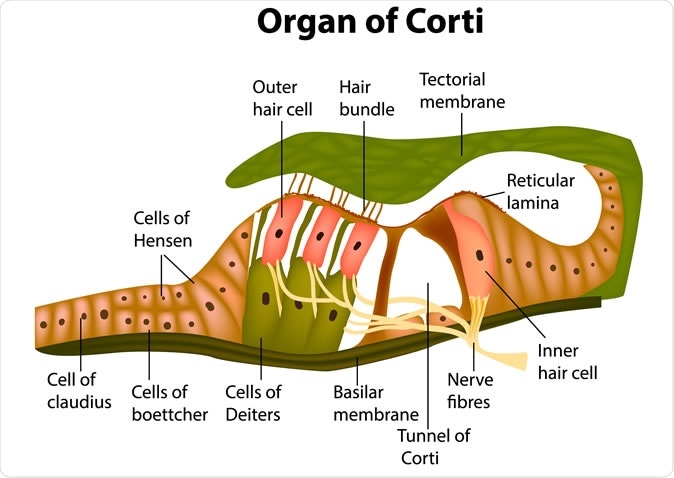
Nerve fiber innervation is much denser for inner hair cells than for outer hair cells. A single inner hair cell is innervated by numerous nerve fibers, whereas a single nerve fiber innervates many outer hair cells. Inner hair cell nerve fibers are also very heavily myelinated, which is in contrast to the unmyelinated outer hair cell nerve fibers. The region of the basilar membrane supplying the inputs to a particular afferent nerve fibre can be considered to be its receptive field. Kinocilia have their own unique characteristics that defy their classification into simply “motile” or “primary,” which represents one of the higher evolutionary characteristics of mammals. Unlike in some species (such as birds and amphibians) with the capacity for spontaneous regeneration, mammalian cochlear HCs lack the ability to actively regenerate in adults.
function recaptchaOnloadCallback()

The scientists identified a concentration gradient of bone morphogenetic protein 7 (Bmp7) across the length of the basilar papilla at the time of chick hair cell formation. Bmp7 is a signaling protein produced during embryonic development that is known to play a role in the development of bone and kidneys. You can also find hair growth serums that contain active ingredients that have been FDA-approved to promote hair growth, like minoxidil. The net effect of efferent synaptic activity on OHCs is to counteract the depolarizing effect of mechanical activation, thereby inhibiting shortening and reducing their amplifying effect on IHCs. Direct experiments to demonstrate this sequence of events have remained elusive, however, due to the technical difficulty of making electrical recordings from OHCs in an intact cochlea preparation. In the future, this may be an area amenable to the use of voltage-sensitive dyes rather than microelectrode recording.
Addressing shortfalls through diet and supplements: Does it help hair growth?
Gata3 is required in late proneurosensory development for proper sensory cell formation and organization Scientific ... - Nature.com
Gata3 is required in late proneurosensory development for proper sensory cell formation and organization Scientific ....
Posted: Thu, 03 Aug 2023 07:00:00 GMT [source]
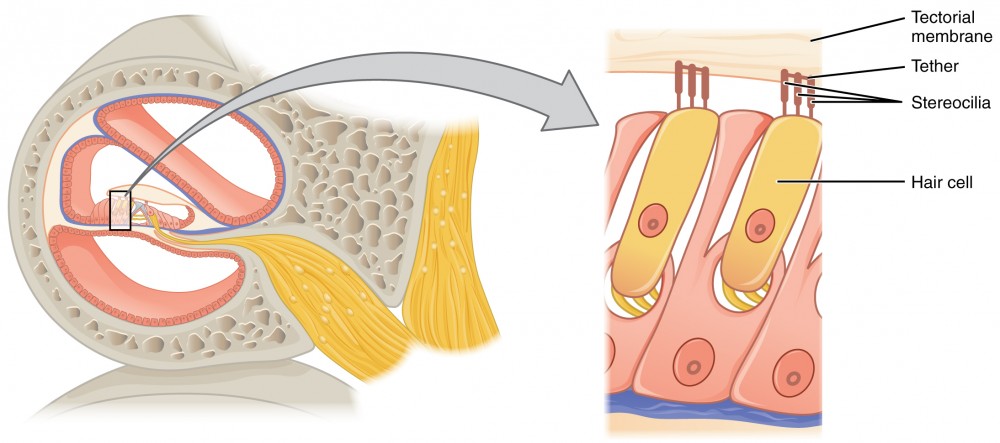
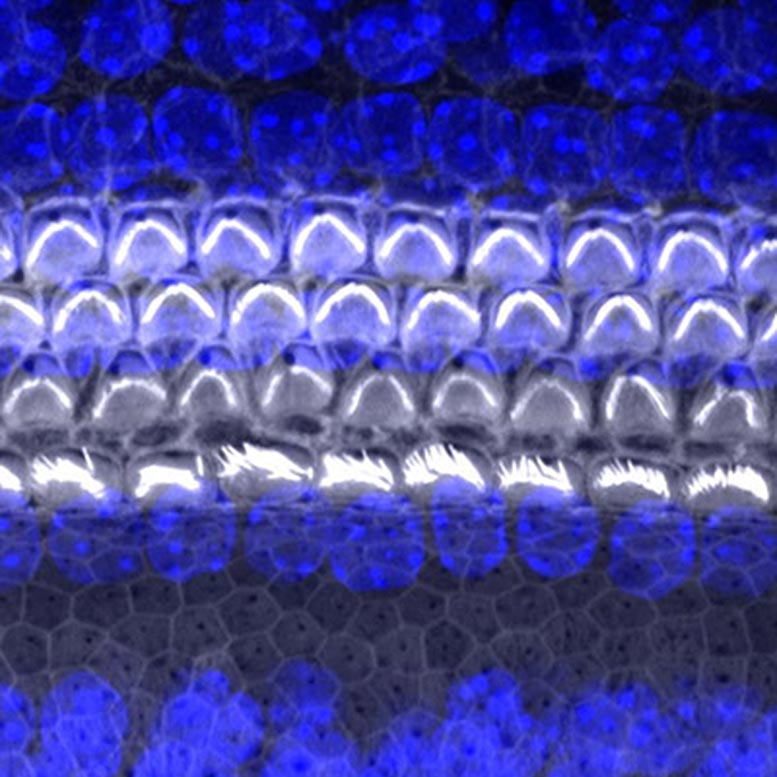
This could have been necessary to drive the activation of the large conductance, Ca2+- and voltage-gated potassium channels, BK, present in efferent contacts of OHC in high frequency regions of the mammalian cochlea (Wersinger et al., 2010). The Ca2+ affinity of BK channels is two orders of magnitude lower than that of SK channels (Fakler and Adelman, 2008), requiring higher Ca2+ influx for activation. Structurally, the OHCs have more stereocilia and the W-shaped arrangement of the stereocilia is more pronounced (Furness and Hackney 2006). In addition, the tips of OHC stereocilia are physically embedded in the overlying tectorial membrane, while those of IHCs are not. The functional significance of this arrangement became apparent when William Brownell and colleagues discovered that OHCs could shorten along their base-to-apical axis when depolarized (Brownell et al. 1985).
Sesn2/AMPK/mTOR signaling mediates balance between survival and apoptosis in sensory hair cells under stress
The apical end is exposed to the K+-rich, Na+-poor endolymph, which is produced by dedicated ion pumping cells in the stria vascularis (Figure 13.8D). The basal end is bathed in the same fluid that fills the scala tympani, known as perilymph, which resembles other extracellular fluids in that it is K+-poor and Na+-rich. The resulting electrical gradient across the membrane of the stereocilia (about 125 mV) drives K+ through open transduction channels into the hair cell, even though these cells already have a high internal K+ concentration. K+ entry via the transduction channels leads to depolarization of the hair cell, which in turn opens voltage-gated Ca2+ and K+ channels located in the membrane of the hair cell soma (see Box B in Chapter 14). Repolarization of the hair cell via K+ efflux is also facilitated by Ca2+ entry.

Chapter 19: Sensory Systems
With their unique mixes of varied contributions from Original Research to Review Articles, Research Topics unify the most influential researchers, the latest key findings and historical advances in a hot research area! Find out more on how to host your own Frontiers Research Topic or contribute to one as an author.
Radixin modulates the function of outer hair cell stereocilia
Generating high-fidelity cochlear organoids from human pluripotent stem cells - ScienceDirect.com
Generating high-fidelity cochlear organoids from human pluripotent stem cells.
Posted: Thu, 06 Jul 2023 07:00:00 GMT [source]
In OHC, MET is coupled to the extraordinary capacity of these cells to amplify sound vibration. OHC are able to elongate (or contract) within milliseconds in response to changes in its membrane potential (Brownell et al., 1985; Ashmore, 2008). These cellular movements would further accelerate basilar membrane motion to produce amplification of a low intensity sound wave (Ashmore, 2008). The contractile mechanism involves a protein of the chloride transporters family, called prestin (Zheng et al., 2000), which is highly expressed in the basolateral membrane (Huang and Santos-Sacchi, 1993). Conformational changes driven by the movements of chloride ions would facilitate the elongation or contraction of the cell (Dallos, 2008; Hudspeth, 2008).
The kinocilium of auditory hair cells and evidence for its morphogenetic role during the regeneration of stereocilia and cuticular plates. A large, rigid, actin-filled microvillus on the apical surface of hair cells in the inner ear. Be able to describe the motile response (electromotility) of the outer hair cells. The large outward driving force for K+ on the basolateral side of the hair cell means that no energy expenditure is required to restore the K+ ion concentration gradient during and after the mechanotransduction process. This is a remarkable efficiency of cellular energetics and a prime example of the physiological power of epithelia.
Hair cells are highly specialized cells, attached to be basement membrane in the organ of corti within the cochlea. They have hair-like protrusions (stereocilia) embedded in the tectorial membrane. Incoming soundwaves distort the basement membrane and the resulting mechanical distortion of the stereocilia is transduced into neural signals that are conveyed to the auditory parts of the brain. In addition to the ascending afferent neural pathway, the mammalian auditory system comprises descending efferent or centrifugal neural projections originating in the auditory brainstem and going all the way to the inner ear. Two efferent components can be distinguished originating in the medial, and the lateral, nuclei of the superior olivary complex (MOC and LOC respectively) (Guinan, 2006). The LOC consists of unmyelinated axons projecting to the dendrites of auditory nerve fibers near the IHC afferent synapses (Guinan, 2006).
The organ of Corti rests over an acellular membrane, called basilar membrane, extending all along the cochlea and presenting unique mechanical properties (Hudspeth, 1989). It has the capacity to vibrate in response to fluid movements and propagate this mechanical energy to the entire organ of Corti. The way it vibrates in response to sound is key to understanding cochlear function.
We have about 3500 of them, running the whole length of the basilar membrane. These auditory neurons live in the Organ of Corti, which rides on the basilar membrane and houses one row of inner hair cells and three rows of outer hair cells. When the basilar membrane waves, the tectorial membrane shifts sideways relative to the basilar membrane, and stimulates the hair cells.
After the kinocilium degenerates, stereocilia mediate the entire mechano-electrical transduction (MET) process. When sound waves are transmitted to the cochlea, the shearing motion caused by lymph flow drives the passive swing of the hair bundle and sound signal processing. The main effect of the MOC efferent innervation is to inhibit cochlear responses by decreasing the gain of the OHC amplifier. This effect is observed as a reduction in basilar membrane motion, and also as a transient loss in auditory nerve sensitivity to sound (Guinan, 2006). MOC neurons directly contact OHC producing inhibitory synaptic currents once activated (Art et al., 1984; Glowatzki and Fuchs, 2000). The nature of this inhibitory input was a matter of debate over a long period of time, due to its complex biophysical and pharmacological characteristics.
Other components of the cuticular plate include alpha-actinin, myosin Ie, myosin VI, tropomyosin, and spectrin (Goodyear et al. 2006). The protein ELMOD1 is necessary for normal development of the cuticular plate and apical membrane of hair cells; it functions by stimulating GTP hydrolysis by an ADP-ribosylation factor, ARF6 (Krey et al. 2018). Mutations in the Elmod1 gene disrupt formation of hair bundles and lead to deafness and vestibular dysfunction in mice. The current data suggest that conversion of AFR6-GTP to ARF6-GDP stabilizes actin structures in the apical region (Krey et al. 2018). What, then, does efferent modulation contribute to hearing in non-mammalian vertebrates?
The kinocilium plays an important role in the development and orderly arrangement of the stereocilia, and the stereocilia closest to the kinocilium are linked to it (Fig. 1). In some hair cells, such as those in the mammalian cochlea and in the auditory papilla of some birds, there is no kinocilium in the mature hair cell. In all cases, however, a kinocilium is present during embryological development of the hair cell, and this is shown by the persistence of the ciliary basal body in the mature hair cell even in the absence of a cilium. In physiological experiments in which the kinocilium was removed from bullfrog saccular hair cells, hair cell function was not disrupted (Hudspeth and Jacobs 1979). Together these results indicate that the kinocilium is necessary for normal development of the stereocilia array but that it is not required for normal function (Schwander et al. 2010; Barr-Gillespie 2015).